Showing posts with label learning. Show all posts

Sunday, August 7, 2016

Seeing What We Do Not See: Not for Nothing

His parents and grandparents found out he had flunked out of high school at the moment they waited for him to walk across the stage--and he didn't.

He went on to a life of alcohol, low paying jobs, broken relationships.

Around age 48, he got sober and he realized that if he ever ever ever wanted to rise in the work world, he'd need a diploma, so he went back to school at night - he had a family that needed him to.
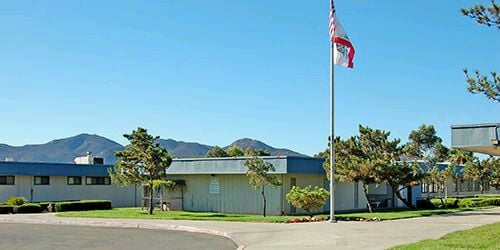
Grossmont Adult School
At age 50, Phillip Esquibel told this story during his address at his graduation from Grossmont Adult School--his parents were cheering for him, but I swear they weren't louder than I was. (They were glad, but I was crying like a baby. And for the record, some babies cry A  LOT--those are the babies to whom I am comparing my crying output.)

I was at his graduation because a student I'd never even had on my roster asked me to come.

I'd met M in an after-school program our 8th grade history department had dreamed up after we realized that most of the Fs in our classes were because kids didn't seem to have one of the two fundamentals a person needs to succeed--adequate personal drive or an adult able/willing to MAKE them take care of business. We decided I'd be that adult, forcing them to come after school, making them stay an hour doing history work. They could "graduate" from our prison of love and responsibility once their habits or grades seemed established (we had only one or two kids exit). I didn't get paid for this, and we didn't have any help beyond the counselor who called the parents and talked to them about this intervention as if it were not an option. We had such limited success and it took so much of my energy that we only did it this one year.

Imagine my surprise when, seven years later, M came to visit the DP teacher's lounge at lunchtime with an invitation for me to come watch her get her GED at Grossmont Adult School. My heart leaped up that she had gone on to TCB on her own, coming to the realization (at age 20) that this was better done sooner than later. (NB: she invited me, not her regular teachers, to the event, although many of them were sitting right there as she asked me. I felt she had given me a crown or a Major Award in singling me out. It was awkward, but while embarrassed, I felt honored and touched to my core.)
This Major Award is also awkward and embarrassing. 

I had never been to an adult school graduation and had no idea what to expect. It wasn't like other graduations I'd been to. It was small, for one thing; there were far more graduates than guests, even though guest seating was limited and some had to stand. The air somehow smelled a little bit like privation and the crowd was weathered and worn after the long day's work. Love was there, and all kinds of pride. The teachers in particular stood out to me, relentlessly positive, faces beaming, full of the stories that their students had told them of broken pasts healed, language and learning obstacles surmounted, wasted time redeemed, aimlessness turned to purpose, goals achieved, new goals set. The students themselves were full of hope and encouragement; one grad's mortarboard's glittered message: "I'm a g-ma--if I can, U can!"
Much nicer than the glitter of the grandma graduating--but the idea is the same.
BTW, the g-ma looked to be around 50 years old; that told part of her story.
It was the best graduation I've ever been to, better than the Harvard commencement address in Latin (which was hilarious because the student kept slipping into commonly used Latin words and phrases and into Pig Latin so the non-Latin speakers understood his gist) or the 1997 address by Madeleine Albright.
A great speech, sure, but Phillip's made me cry.
It was a validation of the human spirit, of the old saying that you're never too old to start, or it's not how you start but how you finish and dozens more old sayings about tenacity.

And watching beautiful M shake hands, taking pictures of her like mad, I wondered if it was also a validation of that long ago program that we'd jettisoned.
Beautiful M shakes hands, ready for the next step in Life
Or maybe it was a testimony to time given, to high expectations, to the influence of relentless attention, to the power of relationship. September is coming, and while I do love my summers and, like a proper Beach Boy look forward to my Endless Summer, I can pick up my new teacher year with a renewed sense of faith in the power of Love, knowing that while we teachers do not usually get to see the direct outcome of our efforts or caring, we do not love in vain.


Sunday, June 12, 2016

It's the Final Countdowwwwwn! Beach chairs, hard work, and carbonated rewards

Every September, I tell the kids that students who score 103% in my class in June are exempt from taking the final. 

Every test, I remind kids that the final is given after textbooks are turned in, AND that the final comes out of the questions on their tests; I remind them that our test correction sessions are very valuable for their future June selves. 

Every assignment, I give a bonus point to students who really did a fine job. This is how people are able to earn more than 100%.

Every June, I give a comprehensive final that covers everything from Jamestown all the way up to wherever we land; this year, it's the end of the Civil War (no assassination, no Reconstruction, no Jim Crow: where did the time go?). 

Every June, the students who have achieved that dizzying number (ok, so it's really 102.5% because I believe in rounding up) sit in lawn chairs outside the classroom, drinking the soda of their choice (which I supply), munching on snacks (which they bring), playing with their electronics, listening to music, signing yearbooks, chatting, and basically feeling care-free and special as a reward for their commitment and fine work in my class over the school year.  Mathematically speaking, even if they scored a zero on the 50 point final, they'd still have an A- in the course.  Scholastically speaking, dang.

Every year, I am delighted to celebrate their outstanding achievement with their names in my window. 
This is how it looks in my brain. The reality contains considerably more blacktop and zero grass. 

Every year, it's a pain to round up beach chairs from the teachers and search for the sodas they like (inevitably, someone wants a @#$! Cactus Cooler or a !@#$ Welch's Grape Soda--WHERE CAN I BUY JUST ONE CAN OF THESE?), but I don't really mind....it's the least I can do for the kids who've done the most. 

Sunday, August 2, 2015

In Summmmmmmmer!!!

So it's summmmmer!!! I've been busy doing summer things. What might that mean?

FUN THINGS!!
RESPONSIBILITIES
   Well, there are some very fun things.
   1. Hawaii for the first time
   2. Catalina Island
   3. The beach


             Some are less fun.
             1. Blood test at Kaiser
             2. Tune up
             3. You get the idea.


    For teachers, there is always a weird tension about summer; as an educator, what's it for?

A. For taking care of all the things I neglect during the school year? (Hello, messy sock drawer.)
B. For having all the fun I was denied every Saturday for 36 Saturdays? (Hello, travel, friends, books.)
C. To relax and get recharged? (Hello, work outs, afternoon naps, evening jacuzzis.)
D. For professional development? (Hello, big ugly giant new writing unit for our school by Lucy Calkins.)

The answer should be all of the above. But that last one....

Toward May, a student monitor came into B-5 and plunked down the huge Lucy Calkins series of writing units thingy on a table. Rationale? The Boss told us it's what his boss wants us to do; not very compelling, if you ask me. We had one (optional) day of professional development about it. I (opted) out. And now The Boss has a new boss. So do I still need to read all this?
It really is big and ugly, isn't it?

I have been guilting about these units all summer. (Yes, I just coined a new word. It's all part of my summer's work.)

In June, I opened one of the four books that comprise it. "Ick, I can't read this now. It's JUNE. I'm packing for Hawaii. This is too heavy."

In July, I opened it again. "Ick, I can't read this now. I am too busy with guests and to-do lists and Harper Lee's first novel that was released second and books for three book clubs and Catalina. I'll read it later."

It's August...
I
am
running
out
of
excuses
and time.

But do I want to use my last precious days of summer reading a unit that The Boss's new boss might not even care about?

Vote now!!


Saturday, November 15, 2014

Chatty Cathy (and Charlie, and Christy, and...)

One of my classes this year has a majority of kids who just like to talk. They sing to themselves under their breath, even, when they aren't talking. There are so many that I am sometimes reduced to elementary school management techniques such as writing the word Q U I E T on the board and erasing letters as a threat to keep them after class right before (oh, I am the Lord's favorite to have the talkers this period) lunch

I am not proud of this.

I spent a whole week on interactive lessons wherein the kids were supposed to learn that many people thought our first constitution was too weak and our country was skidding toward chaos....

Me: "So there were two extremes our founders feared. Can you name them? One, two three--"

Class, tentatively and not in unison: "Dictatorship and anarchy..."

Me: "Nice. After what we learned all week, to which extreme does it look like the US was closer?"

Class, enthusiastically as one: "Dictatorship!"

Me: NOOOOOOOOOOOO!!!!  


My colleague who shares many of the same kiddos observed me and said this batch just likes to bellow out  just to be heard, no thinking. I must cling to that.

The other classes understood the lesson completely.

I am slightly mollified.
Nooooooooo!


Tuesday, April 1, 2014

A Haiku Series Advocating Student Diplomacy in the Face of Missing Class

Based on a true evening email exchange between myself and a student:

STUDENT:

I have been absent--
Did I miss anything that was
important today?

TEACHER:
Can you find a way
to ask without implying
my class wastes your time?

I am off to bed.
In response to your question,
the answer is "yes."
 ---------------

Of course, sometimes I tell these offenders that Beyonce performed for our class. Or that we all took naps. And when the kid gives me the "C'mon, tell me what really happened" face I tell them the truth: I taught my guts out and they can get notes from another kid and hope another person can explain to them what they've missed. 

Sometimes students expect a private tutoring session. Am I a bad teacher for refusing to do that? For refusing to try to encapsulate what took me 55 minutes of extraordinary effort to teach? To recreate for an audience of one what I orchestrated the day before for an audience of 159 in five classes? 

I obviously don't think so. It wasn't the student's fault she was sick, but those sorts of losses are not the kind we can just restore with five minutes and a pat on the head. The losses are real. The book can tell the kids the basics.  The book cannot recreate our conversation, our inquiries, our interactions. The book does not crack dumb jokes or pose useful analogies to help kids make connections the way I do. The book cannot explain what it means the way I do in a class. Insofar as explaining after school something that a student didn't understand in class, that's fine with me, and I am eager to do so--unless the said kid was busy not paying attention. 


Here's another teacher who was moved to write a poem:

Did I Miss Anything?

Tom Wayman

Nothing. When we realized you weren’t here
we sat with our hands folded on our desks
in silence, for the full two hours
     Everything. I gave an exam worth
     40 percent of the grade for this term
     and assigned some reading due today
     on which I’m about to hand out a quiz
     worth 50 percent
Nothing. None of the content of this course
has value or meaning
Take as many days off as you like:
any activities we undertake as a class
I assure you will not matter either to you or me
and are without purpose
     Everything. A few minutes after we began last time
     a shaft of light suddenly descended and an angel
     or other heavenly being appeared
     and revealed to us what each woman or man must do
     to attain divine wisdom in this life and
     the hereafter
     This is the last time the class will meet
     before we disperse to bring the good news to all people
          on earth.
Nothing. When you are not present
how could something significant occur?
     Everything. Contained in this classroom
     is a microcosm of human experience
     assembled for you to query and examine and ponder
     This is not the only place such an opportunity has been
          gathered
     but it was one place
     And you weren’t here


From Did I Miss Anything? Selected Poems 1973-1993, 1993
Harbour Publishing
Copyright 1993 Tom Wayman.
All rights reserved.

Monday, March 31, 2014

"Are You Really Reading This, Thomas Jefferson?"

As a kid, I had the feeling most teachers didn't really read what I wrote. They passed out hundreds of "worksheets" and who could stay on top of all that paper?

In high school, the English teachers (or was it the school?) employed what they called "readers," college students who would read the papers, correct them, and even assign suggested grades. I knew my teacher at least read mine, anyway, because she'd often write a different grade on top, once with the little note, "I don't know why this reader consistently underrates your work." Smiley face for me.

I had a half-hearted (perhaps broken-hearted, but that's another story) Spanish teacher who assigned work for us to do each day, but collected the whole lot on one day. Now I most assuredly did NOT do one bit of that homework until the night before it was due when I frantically ripped some paper out of my spiral notebook and began typing out those jillion ejercicios. But after doing a few, it occurred to me that this lazy man was not going to read all of pages. I began skipping numbers:

1.
2.
3.
5.
6.
7.
8.
9.
11.
12.

And sometimes an ejercicio called for me to do 1-12, but I only hammered out 1-10. I probably shaved off about 15% of the actual assignments on the calculated gamble that this fellow wasn't going to check my work.

I began typing nonsense sentences, sprinkling them throughout the ejercicios: 
 9. El viejo quiero una banana para su perro ("The old man wants a banana for his dog")....  
13. "Hay una banana en mi cuarto, a veces en el piso" (There is a banana in my room, sometimes on the floor).

(I wrote many sentences about bananas. I don't know why; it was a fun word to type, perhaps.)

And then this very bold sentence I'd put in more than once: ¿Ud. esta leyendo esta tarea? No creo que Ud. esta leyendo esta tarea ("Are you reading this homework? I don't think you are reading this homework").

And when I got my ejercicios back, there was the large red A- with an arrow pointing to the raggedy spiral notebook margin I hadn't bothered to cut. Clearly he'd counted the number of ejercicios and was fooled by the dignity the typewriter lent them. Clearly the raggedy notebook margin was the reason for the minus part of the grade.

Clearly this has impacted me as an educator.

I am compelled to actually read what the kids write, to comment on their thoughts, to circle errors and question their answers. Over the years, I find expressions of my same doubts: "Are you really reading this?" And I respond: "Of course not." Sometimes a student writes asides or doodles little cartoons, and I add to the art and write my own asides. "Miss M was here, paying attention to your work," my additions report.

This commitment makes me testy when kids turn in half-hearted work. But is my annoyance directed at the right target? Have other teachers taught them that their work is merely checked for completion, not content? Didn't I have a history of dodging work when I could? Kids soon learn that I truly read their papers, so it isn't until December that I get really truly annoyed when someone turns in hasty, shallow, poor work that promptly receives a pathetic score.

Anyway, with super smart kids, their "Are you really reading this?" queries can be a bit more subtle:


D. sends out a test. Miss M. passes again!

And the answer is, was, and ever shall be: "YES. I am dignifying your thoughts and analyses with thoughts and analyses of my own. This is a dialogue. I care about the time you spent doing work I asked you to do because I believe it will help you better grasp this skill, content, or idea. I grade your work because I sometimes never received essays back from teachers and I suspected my time and efforts went into a trashcan, leaving only a checkmark in a gradebook, and I promised I'd never disdain a student's work that way. Even as I begrudge the time it takes me, I grade your work because I want to dignify your work with my time. I grade your work because I care about you."

That's the truth.

Friday, March 7, 2014

Elie Weisel and the Little Rock Nine: Unbelievable but True

The first time I ever taught Night by Elie Wiesel, as I scrambled for resources to do this memoir justice, I stumbled upon wonderful materials that were written by one Dr Chris Frost. Mr. Google told me he was a professor at a nearby university. I sent him an email asking if he'd mind if some precocious 8th graders used his materials as we studied the book. He said we could--and offered to come lecture the students--for free.

I was floored by the generous gift of his time (and that he was unafraid of 8th graders, as many adults seem to be). As it turned out, he was one of just 18 students to sit under Wiesel at NYU the first time Weisel taught his own book. Can you even believe it???

His presentation gave our students rare insight into Night and afforded us an opportunity to ask loads of questions. At the end, we presented him with three carnations--a white one for Elie and those who endured the Holocaust, a red one for those who, like Dr. Frost, were teaching truth, and a pink one to represent the students and their promise--he was visibly moved. He said, "I'll have to tell Elie about this today." Can you even believe it???

When asked what courses he was teaching next, he said he was teaching a summer course comparing C. S. Lewis and Sigmund Freud....in Oxford, England. It so happened that I was going to Oxford to spend a week at the C. S. Lewis conference. "We'll have to meet up," he said. "I'd love to crash a class," I said. Can you even believe it???

It turned out the last full day the students and he would be in Oxford was my first day at the event so I couldn't sit in on his lecture. But then I got my agenda for the conference and that first evening Lamb's Players Theater was presenting "Freud's Last Session," a play about....ohmigosh, an imagined meeting of Freud and Lewis. He was able to get permission to see it with his students. Can you even believe it???

So this year is the first year I am teaching Warriors Don't Cry by Melba Patillo Beals, one of the Little Rock Nine who integrated Central High School in 1957. A parent of one of my kiddos forwarded a flyer informing us that Carlotta Walls LaNier, the youngest of the Nine, was to speak that very week at a local community college. And after a riveting evening of insights and stories and questions answered, I was in line to buy her book when one of my students came over to present me with a copy as a gift!! Can you even believe it???

Mrs. LaNier signed our books and agreed to a photo with us. I don't ordinarily rub shoulders with historical figures...and I want to have proof that it really happened. Because I can hardly believe it.

Here is a picture with two world changers--one of the Little Rock Nine who courageously stood up for justice and my student MRC., an incredible girl who is so gifted I can't believe I get to teach her and I can't wait to see how she impacts our future.

Thursday, January 16, 2014

No Lumpia for Me

MONDAY: I pass out the announcement for our next salon, our culminating event after analyzing Lord of the Flies, and I can't believe my ears: actual groans and grumbles.

Really? You guys don't want a luau? (do not let them see you wilt. do not take this personally. do not think about all the lumpia you won't be eating do not do not do not)

Not really, they say.

Does this mean you didn't like the first one?

NO!! they explode sincerely. We loved it!  But this one seems like too much work, and we have so much going on in our other classes.

OK, no salon, but you will each need to do your own music assignment independently.

Again there are some groans, but I don't care--I want to try this activity: each student has to choose a song that she thinks fits the text and then document it to death. I show them my example with citations from our text:
                                       
The Who: Baba O'Riley written by Pete Townshend

Out here in the fields                     (The whole text is on an island—“out here”)
I fight for my meals                       (Jack hunts for meat: 68)
I get my back into my living         (Ralph and Simon build huts: 50)
I don't need to fight                       (Piggy is always right, but can’t
To prove I'm right                                   fight back when antagonized or questioned: 71)
I don't need to be forgiven            (Jack apologizes once—never about Simon or Piggy: 72)
Don't cry                                       (Ralph cries for the death of Piggy only in the end: 202)
Don't raise your eye                     (Roger is furtive, doesn’t make eye contact: 22)
It's only teenage wasteland          (No adults on the island except a dead one: 95, 96)

THURSDAY: We share the songs--"Demons" by Imagine Dragons was selected by four students, two have written about "The Eye of the Tiger," and the class clown has chosen "Don't Stop Believin'." I ask them if this was easy or difficult, and it turns out it was challenging on a surprising number of levels. I will definitely try this again next year. Kids learn documentation, learn how to support their thinking, and as S. put it, "To put on paper our ideas and connections in a way that would make sense to the reader."

Of course they want to me play the songs. I tell them that was supposed to be part of the salon they didn't want.  And then I play some of them anyway. I am their hero for this melodious minute.


Friday, January 3, 2014

Fats Waller Was Right: "One Never Knows, Do One?"

One girl's smile as I
opened the huge, heavy box,
Overpowering scents...and love
filled with teenaged joy:

Shimmer body mists,
candy, two lotion bottles
And.....a stuffed turtle!!!

This bounty she gave
despite her low grade, despite
her classroom silence

And so the truth, proved
once more, that teachers can't know,
can't guess, whom they touch

G. handed me the giant box, heavy, shifting, right before lunch (all kinds of sweet things have happened this year with period four, right before lunch). I hugged her and told her I'd open it on Christmas morning. "No, open it right now," she urged, eyes shining.

Uh oh, I'd better put on my "appreciative teacher face" because sometimes kids give the darndest things, even things I can't identify, and I have to step diplomatically and enthusiastically through emotional land-mines.

But this time, I was blown away. Every one of the items was something G. would love to keep for herself, but she gave to me out of love. I know her family doesn't have a ton of money, but whatever they gave her for shopping, she had poured so much on to me that I got a little dizzy and my eyes leaked. I looked up at her and her face was beaming, gratified that she had overwhelmed me. Big hugs, and off she went.

And so I know now that G., despite the tug of war grade between a D and an F, despite her stream of Fs on tests, despite me routinely asking her to re-do assignments because they don't make sense, despite her lack of voluntary participation in class--loves period four as much as I do. 

HAPPY NEW YEAR!


Saturday, December 21, 2013

That moment when the high school usurps your curriculum...AGAIN

Last post was about my thrilledness (Humpty Dumpty and Shakespeare give us all permission to invent words) over my highly gifted kids getting into Lord of the Flies. I was exuberant.

(I never blogged about why this unit was a big deal. See, I'd been teaching Animal Farm and To Kill a Mockingbird to my 8th graders for four years when the high school VP emailed my principal and told him those books were now (thanks, Common Core) going to be taught in 9th grade. It was more than lame--for one, I was getting ready to launch AF in a week or so, and two, TKAM is just my favorite. For three, teaching TKAM was so awesome after teaching Elie Wiesel's Night--to teach about a man of courage just brought me joy and was a wonderful counterpoint to Night's darkness. OK, I reconciled myself to writing units for two new texts this year. I asked the VP what the upper grades were teaching and only heard from one 9th grade teacher.

Fine. I spent days creating a unit for Lord of the Flies, and boy did I get excited. Talked to a teacher friend in Texas. Stole a few ideas from a teacher in Pennsylvania. Got some ideas straight from the Creator. Man, this was gonna be waaaay better than AF, waaaaay deeper. You can see read about my excitement here and here.)

Things just kept getting better, especially when I assigned chapter 8 for reading and the kids came in all shaking their heads about the answer to the question, "Who IS 'Lord of the Flies?'" Whoo!!!

After school that day I had a couple of formers come by to visit, sophomores in Honors English at the local high school. "Guess what we're reading, Miss M?" Oh dear Lord, please, no....

I dashed off an email to my principal and the high school VP, forwarding an old email where I'd asked for what the upper grades taught. I told them I'd heard no reply. I told them SOME of what my unit contained--Hobbes, Rousseau, leadership theory, Christ figure symbology, Freud--and got the response: "My best advice is to check with the department head before you select novels."

Are. You. Serious....

If my kids could do this in 8th grade, shouldn't the 10th grade teacher tackle something tougher? Give them Plato. Or just TELL ME WHAT THE UPPER GRADES ARE DOING, AS I'D ASKED. Or ask US what WE'VE done at the lower grades!

Anyway, my principal wrote a response supporting me: "Please understand that we need to keep Lord of the Flies here at DP." I haven't heard anything back from the high school or from him. I am hoping no new news is good news, but it's been a loonnnnng time since I have been that deflated. Gonna press on this year with my plans--comparing Peter Brueghel's paintings to the novels, finding music that goes with each character (compiling the definitive LOTF soundtrack with rationales), writing fine literary analysis papers, and celebrating all of it with a luau complete with PORK (bahaha) and the "islands" creating displays of the symbols and characters chosen from the text: fire, specs, the conch, the beast, pigs, Ralph, Simon, Jack, Piggy......and when they get to high school and the high school forces them to do the same things I had them do already, it will be upon THEM to write a new unit. These kids are ready for more.

And I think I am done giving up the books that work so well with my history course. 

Tuesday, December 3, 2013

That Moment When the Class Finally.....

I was beginning to think it would never happen, that inner click you feel as an educator when your class corporately buys into the book you are reading. But it happened today, and what a relief.

DAY ONE: Name choosing and nametag making was fine, fun, childish, unacademic, and silly--but good team-building. 

DAY TWO: It did NOT go well. We began with a Golding bio--fine as it went, and then started the book from the Pulitzer Prize winner. But the yards of description Golding pours into the island bogged us down (my exact 10th grade reaction: "Who CARES about all this stuff?? Tell the story, already!").  Boring. Yawn. I brought out the conch--mild interest--passed it around--mild interest. Sigh. I assigned the rest of chapter one for homework. I felt defeated.

DAY THREE: I passed out leadership style readings. This was a bit more interesting. In their islands they had to connect the styles to the boys and write down where in the text their support was. I asked, "Was this activity ok?" B., who LOVES to learn, said sincerely, "This was fun!" But MR. gave me that apologetic head tilted smile that said just as loudly, "Not really." I still felt better because the groups were talking. We launched the next chapter and made lists of the boys, their traits, the symbols, and our designations of meanings. The list-making was full-class but half-hearted. I trusted that list, though. I was thrilled when the kids posted Ralph as democratic and Jack as autocratic. Small victories when things aren't going your way can feel like huge ones.

DAY FOUR: I began chapter three with a handout about characteristics of Christ figures I teacher-stole from a wonderful teacher in Pennsylvania. More interest, especially when we looked at Obi-wan Kenobe, Gandalf, and Dumbledore in that light (they weren't familiar with Cool Hand Luke). "Is Simon going to die?" asked an astute person. "Perhaps, but necessarily--do you think Simon will be crucified or resurrected?" I returned. The normally jolly N. was uncharacteristically scornful: "Number 11 on this list is dumb! No one is a carpenter!" And so we began the chapter only to find the Simon is helping Ralph build a hut. "He IS a carpenter!" someone yelled triumphantly. Things were looking up. They finished chapter 3 over break. The Christ figure trope was a revelation for them, a novelty, cool and adult.

DAY FIVE: We pretty much straight read chapter 4 as a class, adding to our list about the boys. I talked about symbols, and the kids were a bit more into the drama. My VP walked into watch. Wish I had something better than reading aloud. Nope.

DAY SIX: But then today. Ah. Half the students read about Rousseau and the other half about Hobbes. Then we had a Chalk Talk--I had prepared the classroom with ten quotes, half from R, half from H, and the students responded to the quotes and to each others' responses using dry erase markers. It was like having ten silent conversations at once! I had warned them about writing stupid things like "I like turtles," but about three boys couldn't help themselves (Hobbes would say that--and I will use that tomorrow as an example in class). When we began to review chapter four, a shift happened. I don't know what, but the kids began to see the story as a story of human nature. I let them talk. "Would the kids treat Piggy differently if he looked different?" "I think Jack punching Piggy is a sign of civilization running down." (!!) "But what about the cover on this book? Why is that giant fly near Piggy? Is he Lord of the Flies?" And off the discussion ran: who WAS Lord of the Flies?

God bless this ambiguous cover
I finally shared what any bible-reading, church-going Protestant fifty years ago would know, that The Lord of the Flies is Beelzebub, Satan. (I did this by showing Wikipedia's entry and scrolling to the verses in the bible in Matthew 12.) The kids got excited about the reference to the house divided--"The island is dividing!" And then they wondered if the Beast, or maybe Jack, was the Lord of the Flies. Someone wondered if Piggy's name was connected to the pigs on the island. "The names are significant," is all I would say until a girl jokingly asked if Ralph was going to vomit since his name is slang for vomit. "His name means 'counselor,' I said. A thrill ran through the class, I felt it. I decided to share with them the secret of names that had captivated me decades earlier.  Above the lists of the boys, the students watched as the meanings of the names were written:
Ralph - counselor
Jack - supplanter, usurper
Simon - listener
Roger - spear
Piggy

"Piggy's name is significant because it means what it says." And the class blew up--"Piggy is going to die, not Simon!" "Simon is going to save Piggy because he is the Christ figure!" "Jack is evil and must be the Lord of the Flies!" They were all* so excited and absorbed, making connections and predictions--"Roger is Jack's tool to kill Piggy, just like Jack speared the real pig!" "Jack broke Piggy's glasses, does that mean the end of intelligence?" OK, cue the bell.

Tomorrow we will look for Hobbes and Rousseau in the text and have a quiz contest among the islands groups. But I believe that when I assign chapter five as homework the kids will enjoy it. FINALLY.

*"All" is a relative term. Do 36 students ALL do anything at the same time? In a class of 36, many of whom are introverts, it is sometimes difficult to be accurate about "all." I use it here in the teacher sense of "heavy majority with 36 sets of eyes looking alert."

Monday, November 18, 2013

Launching a Novel: A Team Approach

Today was Day One....but the books weren't here yet so I needed to stall.

I already had the kids in groups of four balanced for extrovert/introvertedness and work ethic (they are all bright, so I didn't have to worry about that). On the board were posted nine teams--or ISLANDS, as I am calling them:

Conch       Fire       Pigs      Spectacles     The Beast      Ralph      Piggy      Jack     Simon

First, we had a rock/paper/scissors war to see which team chose which name. And then, in reverse order, teams select from nine different colored team name tags. And then, teams had to choose an alliterative name and design the name tag. This took all period!

(I felt a little badly, because I know how some of the teams will bond with their character--Piggy's team will be upset, but will they be more upset than Jack's team? And Jack [his real name] is on Jack's team....but....)

....This was team bonding. They were exercising decision-making and tomorrow when we discuss leadership styles and launch the book, they will not only be analyzing the characters in the novel, but the characters on their "island."

So here they are:

Cool Conches
Fergalicious Fire
Petrifying Pigs
Sassy Squid Specs
Bewildering Beasts
Reck-it Ralph
Proper Piggys
Just Jack. (with the period)
Simon Says

These tags are on a board, and there will be a place for the best team for that assignment to move to called "Who's Got the Conch?" Plus, when I was in Puerto Rico I bought a gigantical conch and it will be magical when they see it after Ralph in the book finds it. And they will enjoy David Gunnar blasting it (especially since one Sassy Squid Spec is named Gunnar) :


Don't be fooled by this dorky intro; we will be reading Thomas Hobbes, Jean-Jacques Rousseau, Sigmund Freud, leadership theory, and more before we end, and we will each write a serious piece of literary analysis. The culminating salon will be a luau with ROAST PORK, of course, and each Island will decorate their table appropriate to their symbol/character, and will present at the luau how their character or item highlights Golding's theme, adds to the plot, and something else I haven't yet decided.

Having the students on Islands means they have built-in discussion partners, built-in, long-haul team work, and that some days I'll only have to collect nine assignments instead of 36. I am also pitting them against each other (overtures of Jack versus Ralph, right?) for each response and that should up the quality for this highly competitive group.  My dream class would be where we could decorate the room like the island in the book as we learned details about it...

Sunday, October 13, 2013

Feeding Your Teacher-Soul

Let me lay down some truth:

1) No one understands this job who hasn't done it, but they all think they understand. People will always say stupid things like, "If you complain about grading it, why did you assign it?" They will say stupid things like, "You get out at 2:30 and get all those holidays off." It helps me to remember that if Jesus forgave people for crucifying Him, I should forgive such radical, deep-seated, COLOSSAL IGNORANCE of what it takes to do this job well. Keeps the old blood pressure low.

2) If you care about your job at all, Teacher Brain happens. This is a condition that is marked by the inability to think or talk much about anything else except what happened in the classroom and what you need to get done for school. Where ever you go, you are thinking about lesson plans or challenging students. It can make you verrrrry boring because all of your sentences begin something like, "Last Thursday in period 4...." In extreme cases of Teacher Brain, you dream about school all the time.

Now teaching is the most important job besides parenting. And I love it. But the Two Truths have made me doubt what I do at times.  Look, forever being misunderstood and isolated by my career's idiosyncrasies is no way to live my one precious life.

So here are some ways I've found to feed my Teacher-Soul.

a) Unplug. Choose one night a week to go screenless. No grading allowed. No planning. If at all possible, no talking. Find the quiet. Ahhh.

b) Read a book that is NOT a professional development book. (This is my favorite!)

c) Read Angela Watson's Awakened, a book specifically written to help us teachers deal with Teacher Brain and teacher burn out. It's reallllllly sensible, and since Watson was a teacher, she KNOWS.

d) Watch teacher movies that inspire you, not demean you. Say "yes" to "The Ron Clark Story," "Stand and Deliver," "Dangerous Minds," "To Sir with Love" and the like. Buy them. Watch them when you are down. Avoid movies that trivialize the true work of educators.

e) Schedule fun. If you don't, those @#$% essays will consume you and embitter you. (Not a pretty combo.)

f) Join social media that is deliberately teacher-uplifting. I am loving Angela Watson's "Encouraging Teachers" on MugBook. Talking to other people who really DO understand what you do is a safe place to vent without boring anyone, and no one will say profoundly STUPID things.

e) If you can swing it financially, keep your precious summers free of summer school. It'll take a little while for Teacher Brain to subside, but that time will rejuvenate you and ensure that you love your job even two decades after you started. Well, that's a personal testimony. But we simply MUST step away from the classroom for our own mental well-being.

f) Exercise! But you already knew that one, right?


Friday, June 7, 2013

The YMCA School of Swimming, German, and Feisty Sharks

Long ago when we were wee 'uns and enrolled in a Backyard Swim class, my brother told me that at the YMCA, they just threw you in the pool and let you figure out how to stay afloat. Although that's not true (is it?), my student teaching felt a bit like being thrown in the deep end after having merely READ about swimming, with a university supervisor, master teacher, and my own rising panic all screaming, "Swim better!" as I flailed about in a pool with 30 smallish but feisty sharks. Consequently, whenever I have student teachers, I've always tried to make things easier for them.

My current student teacher began the semester boldly independent, sure that he could be an amazing teacher right away, mostly by building rapport with kids, which meant talking about football. Without realizing it, he began pretty much copying my day-to-day lesson style and sometimes whole presentations, using my examples and pauses, borrowing far more from me than he imagined, because lesson planning is time consuming and he was teaching, going to school, and working ten hours a week: "I liked the test you're giving, so I'm going to use a lot of it" meant he was pretty much going to change my joke question to one about the Philadelphia Eagles. I suggested activities, had him spin them his way, let him use my homework, and let him believe that he was mostly original.

So. Student Teacher realizes his 4th period is beginning to turn on him (the worst feeling) with only two more days of school, today and next Monday. Finals are over today. "What do you have planned for Monday?" I ask.

"I don't know."

"You better think of something, because the natives are restless." With no test to dangle over young teens and as a teacher without much life experience and with not much originality, he's in deep water.

He hemmed and hawed and hung about, and said, "I wonder what I could do? I wonder what would keep them involved? Hmmmm."

Yes, he was flailing, hoping I'd rescue him. "The internet is loaded with ideas, M." Suddenly, I was working for the YMCA.

"I know! I'll teach them to count in German!" He looked at me for feedback. (Teach them to count in GERMAN?!? OK, that'll be interesting to about ten of them. But twenty sharks'll kill you just as dead as thirty. "If you were thirteen, would that interest you?" is normally what I would ask, pushing him to fix his lessons until the answer was "yes.")

"What incentive will you use? I think you are going to have to cave and buy candy."


"Yes, that's what I was planning to do." I tell him I'm glad he thought of that, because middle schoolers will do anything for a Jolly Rancher, but I think he told a fib. I hate fibs: my brain thought, "You and your German lesson are on your own. After ninety days of Lola-designed, -modified or -approved lessons, you are going to have to apply what you've learned at Backyard Swim."

I'll be in the room so there will be no blood, but fifty-five minutes feels a lot longer when you see fins.


Thursday, April 4, 2013

Must Be Nice

Courtesy shuttle--driver, passenger, myself.
P: You're going home, not to work?

M: It's spring break! I'm a teacher at DPMS.

P: Must be nice.

D: My sister went there! Did you have J.I.?

M: I did for a while, then she transferred to Mr F.
She's a junior now, right?

P: You must have a great memory to remember each student. How many kids in a class?

M: About 34.

P: YOU TEACH 150 KIDS A DAY?

M: It used to be worse--around 180. 

P: How do you know what they don't know?

M: I grade their papers, but you're right, it's hard.

P: You can't grade all their papers--you have TAs for that.

M: I wish. I grade it all. There are no TAs for that. Look, here are some papers right here. (shows bag full of work to be graded) That's what I'm doing when I get dropped off. Look, some studies say class size doesn't much affect student learning, but no one ever studies how it affects the teachers.

P (sympathetic): How could it not? My kid's elementary class has eleven students.

M: Must be nice.

P: What do you teach?

M: History.

P: Excuse me for asking this, but can't they just ask their smart phones for what they need to know? For when stuff happened?

This is where normally I would bridle and get out the soapbox and quote George Santayana and preach for twenty minutes and totally school him. But you know what? My head didn't explode and I didn't melt his face off. I tell myself I must be nice: he simply demonstrates once again that the study of the past is both undervalued and misunderstood. Unless it is taught poorly (and this is why there were no explosions or melting, because it so often is poorly taught), it is about WHY stuff happens, HOW it happens--much more than just WHAT happened. 

Although it would be nice if people knew WHAT happened, too.

Friday, March 8, 2013

Cruel to Be Kind

Last post wasn't very cheery, was it?
But it was real.

A large part of my angst was training a novice teacher. All kinds of ego and fear were in the picture, because he wanted to design his own lessons and he was going to take over two classes full of my giant thirteen year old babies.

"You do realize that teaching is three huge jobs at once--presenting, planning, and class management, any one of which can be really challenging..." I really thought it might be best to use my already designed standards-based lessons, not because I thought they were good (which I do), but because I wondered about his ability to do the other two. Truth be told, he is physically a bit awkward and his enunciation is mushy; when he shared that he'd 1) been bullied in high school 2) overcome a speech impediment and 3) had had an IEP, I believed him. Colleagues would ask me, "How's he doing?" with the small, knowing smile of one who already knows the answer; they thought he'd be lunch meat.

Here's the surprise: he generally connected well with the kids. He was able early on to think on his feet, to persevere, to press on--wow, stuff that you can't teach--impressive. Granted, he was blessed with the best behaved kids I have ever taught IN MY CAREER, and they were already trained when he took them. But their awesomeness built his confidence on the management front.  Presentation-wise, he was pretty good, sometimes even funny, and his mushy diction didn't seem to pose problems for anyone but me. His incessant football references helped him with some students (although they seemed to alienate others, truthfully).

His lessons? Hmm. That was another story. I worried about how he never. ever. wrote anything down. He shared with me that he responded well to encouragement. Uh, oh. I feel weird about high five-ing grown ups, and in the beginning I wasn't sure I should even be encouraging. I was (and remain) freaked out by the atrociousness of his spelling and grammar ("mils" for "mills," for example). I was concerned about his lack of, or over simplified reflections about how the class had gone. His class management? The typical problems of wanting to win the approval of "the cool kids," of needing them to like him, of passing over the quiet children.

Real conversation snippet: Me: "So what went well today?" Him: "It was AWESOME!"

Sigh. 

So last Friday after something bad happened because he didn't write it down, I sort of turned into the calm, icy surgeon and let the scalpel fly a bit. "You don't read much, do you? You don't like to read. [I had tons of evidence]. It shows in your lessons. You don't want to admit to the kids you don't know something,  I understand, but you can't just make things up. You can't get up there and teach something you don't know about. You need to research the time period you are teaching, dig deeper than the text--read a ton!!-- make sure what you are teaching helps them understand, look at your presentation through the eyes of a thirteen year old. You need to rehearse your lessons, anticipate what they won't get, how they'll respond, blah blah blah...." It wasn't a monologue. But it sure wasn't the "Good for you! You are trying so hard" lines that tone-deaf grandmas give their American Idol wannabe offspring.

And I thought, "He hates me and thinks I'm mean." I'm not really used to being hated, and I'm not mean.

Funny thing is, he TOTALLY brought it this week! His lessons had depth, and so did his understanding. When kids asked questions, he fielded them with soft hands himself, or he said, "Hm, I'm not sure, Miss M do you know?" and let me either field them or shrug my shoulders with him. While teaching them about Sequoya, he even googled how to say "Hello" in Cherokee* and had a mini language lesson.

I gave him a high five after class. He earned it.

And then after school I began speaking in football terms: "I would think you'd want to review your performance--don't coaches watch films of games in order to improve and anticipate, to praise and refine? When I ask you how something goes--" He smiled and interrupted, totally understanding what this elderly lady twice his age was doing, but actually and finally COMPREHENDING the urgency, the importance of what I expected him to do to improve: "You don't want to know the score, you wanted to know the big plays," he said. "No, I want to go even deeper than that: I want to know why you called those big plays, how you were able to execute them, and why you went to no-huddle when the players were obviously lost and there was no audible..." 

Anyway, that seemed to change the air, clear it, charge it. Why can people take constructive criticism from coaches but not others? Coaches can literally YELL at kids and it's no big deal, and kids get out there and work for the coaches' curt nod of approval. I would gently say, "Can you think of another way to get S. to participate?" to a grown man and he'd cross his arms and look injured and depressed.

At any rate, I am finally relaxing. He will not mess up my giant babies. He will be a better teacher over time, he is doing quite well for how early on in the semester, he is grading 40% of the papers, and I will be able to do much of my grading at school, thus freeing up my weekends. Win-win. Or as he would put it, "AWESOME!"


*oh-see-YOH


Thursday, December 13, 2012

Young Scholars: ¡Vivan los Cerebros!

Why sponsor another club and have even less time to do the things I already don't have time to do? In reply, all I can do is show you pictures of the Reasons I do what I do. And when you see them, you'll understand why our school will be participating in the third annual Young Scholars Academic Fair this coming spring:

March 17, 2012: second place winners at YSAF (but first cutest)

Last year was our first year, and we took first place! Well not quite, but second place was pretty close. You can perhaps see our translucent trophy held by our captain, K, on the rainiest Saturday of 2012.

We won every pre-final match--we beat every team, including the dreaded Marshall Middle School, the previous year's champs. Matches were tightly controlled, academic league style, which is probably not as cool as gangnam style, but waaay more inspiring:

Kicking academic booty

We were beyond excited for the championship match against Oak Valley Middle School--after all, we had A. whom we nicknamed WMD because really, his knowledge of everything in the world was atomic, plus we had beat them in an earlier match. We had team spirit--kids thought calling themselves The Skittles was awesome since the candy is bright (as are they) and sweet (as are they) and they could wear different colored t-shirts. Other teams wore dressy clothes and looked sharp, but our team was united by our theme, plus a mom sent packs of Skittles for us to eat as brain food. We were officially Team B, so while we awaited the final match, we threw up our team sign, the letter B in ASL:

Team B in da house

And then we got served. Oak Valley had a WMD of their own, and ours just couldn't seem to launch. We got obliterated. We were disappointed, and a few feisty ones were angry because our W-L record was the same as OVMS yet we took second, and it took all of my teacher powers to scrape their spirits off the floor and send them over with sincere faces and kind words to congratulate the team that bested them fair and square. And I think that helped them find their pride again.

This year we have three returning players and a flood of new talent. I don't think anyone is on A.'s level of weird retention of every fact about everything in the known universe, but the students had so much fun at our first practice this week and expressed such a desire to take first place that Oak Valley better watch out.

I suppose part of my sponsorship is my deep angst that sports overshadows academics in this land I love. Music programs get cut, but not football. So long, Art, but football is the sacred cow. I wish brains got the same accolades that catching a ball brings, but our country largely distrusts intellectuals and dismisses them as out of touch (one reason Obama gets bashed). Yet aside from my philosophy of education, just look at their faces: they are excited about being smart! And that's reason enough.

Sunday, September 30, 2012

Day One, Harry Wong, and Pie

The first day of school isn't, really.

I mean, it's not a normal day of school. Colleagues who ordinarily wear polo shirts are wearing ties. Every student's binder is perfectly neat and orderly. Usually, not the least because teacher demigod Harry Wong says to, the hour is spent establishing the rules and norms of the classroom.

I try something different.

As I wrap up a truncated version of The Rules & Consequences information, I pass out slices of pumpkin pie to random students. The slices are not evenly cut--some are wide wedges; others, narrow slivers. Not everyone gets a piece. In fact, only about ten kids get any at all.

I ask them what they think is going on. The unusual event--random, unequal pie distribution on the first day of school--is enough to get the conversation going, something that can be reallllly hard at the beginning of the year.

"You gave us pie," says one genius.

 "No, I didn't. I gave SOME of you pie."

"You gave pie to the people who weren't talking."

"Nobody was talking when I gave out the pie."

"Some pieces were bigger." "We didn't all get any." "The pie is pumpkin." "I'm hungry."

"This year, we will be looking at three big ideas that drive everything that happens in US history: ideals, economy, and POWER. I gave you pie to symbolize power. In a society, power is not usually distributed equally, and sometimes not everyone gets any power at all. Is that fair?"

A strong chorus of Nos, mostly from boys who received no pie.

"Should I take away pie from kids who had it and divide it that way?" I query.

In fluent Middleschool-ese, a student points out "there wouldn't barely be nothing for no one, just a crumb." Another student, full of pie, points out that taking away his pie would make him mad, even if it was more fair that way. "So would you agree that making a society more fair could be a struggle? Maybe people don't want to share their pie--er, their power. That is what this year is about, folks--trying to build a country where more and more people get a piece of pie--preventing some people from hogging it--all sorts of power struggles."

"Couldn't you just buy more pie so we all could have some?"  It's too early for me to tell if he is wisecracking or serious. I choose to believe he is joking. "Uh oh, no pie for you, ever!" I laugh, and the class laughs with me.

Do you know it can be hard to find pumpkin pie in September? I needed a pie that was easy to slice and would maintain its shape and not schmoosh all over the tables or kids' new clothes.

We end by taking notes (some groan--work already? ha! I am establishing the norm of the class--academic and hardworking from day one, but hopefully unpredictable) on the nature of power, and the bell rings, but they wait to be dismissed by me, because, after all, I have more pie than they do: I am the Pie Master.


Friday, July 6, 2012

Huh? Whah?

Julian Treasurean advertiser whose expertise is sound, fears we are losing our listening skills and wants us to teach listening in schools. In his TED talk, he gives a few tips after he explains the dynamics of listening. He begins by noting that our ability to record (writing and sound waves) has drastically reduced the premium on listening.

Julian Treasure gives some sound advice

Inattention isn't just a problem in the classroom; for those of us who make a living through communication, it's the quintessential obstacle we must overcome. And today we have more competition for attention than ever before. Ever deliver a lesson to someone whose head was bobbing and fingers were drumming, and realize he is listening to a song in his head, and you'd have to repeat everything? Ever try to get someone's attention only to notice that she was wearing earplugs, forcing you to flap your hands about, and then feel as if you are an intrusion?

These past five years as a teacher, I've noticed a shift in the level of imagination that kids bring to the table. They are as exuberant as ever, as intelligent as ever, but when you turn the thinking over to them, many seem truly lost. Are we also losing the ability to listen to ourselves? Isn't that what thinking is?

I have a friend who said she couldn't fall asleep unless the radio was on. Her eight hours were infiltrated by all kinds of lyrics and commercials that seeped into her brain at some level.

I have a friend whose television is always on, loud enough to compete with our conversation, though no one is watching it.

My uncle leaves NPR on in the car, even though he has lively conversations with his passengers.

Mr. Treasure suggests three minutes of daily silence and notes incidentally that nearly every spiritual tradition has contemplation as a component of its practices. Three minutes off the grid with only our thoughts to occupy our minds--could you do it? Could our kids? Would that be "a waste of time" or part of a true education?


Wednesday, June 27, 2012

Graphology, Television, Plato, and Paul

When I was in third grade, we had a guest speaker who was a graphologist. I was FASCINATED by the idea that you could discern someone's personality traits from their handwriting.


The guest said since we were just learning cursive, it was too soon to really analyze our own writing. But I do remember a classmate asking that since our writing showed our personalities, could CHANGING our handwriting shift our personalities--because the guest said YES. I tripped out.  (Hold that thought.)


Now I have never researched graphology (although I admit to analyzing people's handwriting all the time based on what I learned that day--high cross on your t's mean you think highly of yourself. Open loops above your a's and o's? You can't keep a secret), but this morning I wondered if there was a similar link between SES and TV viewing. 


I found a study from 2001 which analyzed viewing habits of 26,420 people in five Latin American countries, and sure enough, what they watched was influenced by their wealth and education.


Here is what the researchers found:


" Insofar as their television viewing are concerned, we observed these preferences:
  • SES Level A: travel, business & finance, economy, recent Hollywood movies (on premium cable channels or pay-per-view), internationally produced drama series, politics  [TOP 10% of SES]
  • SES Level B: biographies, documentaries, general interest & education, local news, sports [NEXT 20%]
  • SES Level C: sports commentary, live music concerts, music videos, cooking, home decoration, entertainment, home shopping, internationally produced telenovelas [NEXT 30%]
  • SES Level D: domestically produced novelas, game shows/contests, comedies, horror, cartoons. [NEXT 40%; see chart below; all brackets Haiku Education's]"
Back to the held thought: can changing one's viewing habits influence one's SES? Hmmm.

Here is the education connection. Aristotle believed that the purpose of education is "to make the pupil like and dislike what he ought." Everything Else Thrown In puts it this way:  "Plato, the teacher of Aristotle, said that a properly trained youth was one “who would see most clearly whatever was amiss in ill-made works of men or ill-grown works of nature, and with a just distaste would blame and hate the ugly even from his earliest years and would give delighted praise to beauty, receiving it into his soul and being nourished by it, so that he becomes a man gentle of heart.”    As scary and Big Brother-y as this can sound, it's true that children tend to develop tastes heavily influenced by those around them and their culture, INCLUDING their teachers. 

AND SO... I want to expose my charges to the beautiful and the true. I want them to feed on integrity and good character. I want them to ask "why?" I want the novels in my class library to help them become noble and jolly. This TV study supports my notion that mainstream TV is an enemy of their financial future; perhaps so are certain types of books. This is not a censorship argument--if a kid is into bodice-rippers, that's her business--but I want to have a shot at helping to WIDEN and perhaps shift that taste to include, perhaps, some Charlotte Bronte or Jane Austen, or Ray Bradbury for that matter. 

I guess I am just echoing what Paul wrote in  Philippians 4:8:

"Finally, brethren, whatsoever things are true, whatsoever things are honest, whatsoever things are just, whatsoever things are pure, whatsoever things are lovely, whatsoever things are of good report; if there be any virtue, and if there be any praise, think on these things."