Showing posts with label books. Show all posts

Friday, September 9, 2016

The Top Ten Cool and Groovy after Two Entire Weeks

The cool and the groovy about 2016/2017 thus far--best launch yet!!!!

1. I still have A/C! Hurrah!

2. No energy-sapping children! When I compare this year to last, I realize how tough a few of them really truly were, how much of my "teacher juice" was used in reining in the man-sized nonstop talker who never did his work during advisory and period 6, or the Trio of Terror that formed period 7 (I got them down to the Deadly Duo after a parent conference with one, but the other two? It was mostly my will against theirs. My will won, most days. Most. All days? The bell would ring and I would think, "Just in time!")

Oh, is the bell ringing already???

3. My day ends with a delightfully sweet class! Last year I ended with my largest and chattiest and Most Likely To Be Seen in the Counseling Office (see above).

No more--I've got sweetie pies, now!

4. My seminar class isn't cliquey! And, they have already earned donuts. This year may be expensive for me...(I buy donuts after a class earns four stars. Stars are earned when 100% of the class turns in their assignment.)


5. All of our new hires are really strong, great teachers! I often spend my preps in my colleagues' rooms as I grade my papers there. I steal all sorts of great ideas as well as see what else my kiddos' day looks like. I can also do a lil cross-discipline application when I know what's up. Annnnd I get to see my students' behavior with other teachers. That alone can be revelatory. I like my new history parter, too. I used to be considered the structured, organized 8th grade history teacher. This guy makes me look like improvisational.  Hoping to learn from this kid--he's sharp.

Trying to be the best I can be by surrounding myself with greatness

6. The weather hasn't been super nasty! Last week was gross, but not as gross as some days of yore that I recall. Most days this week, I didn't use the A/C.
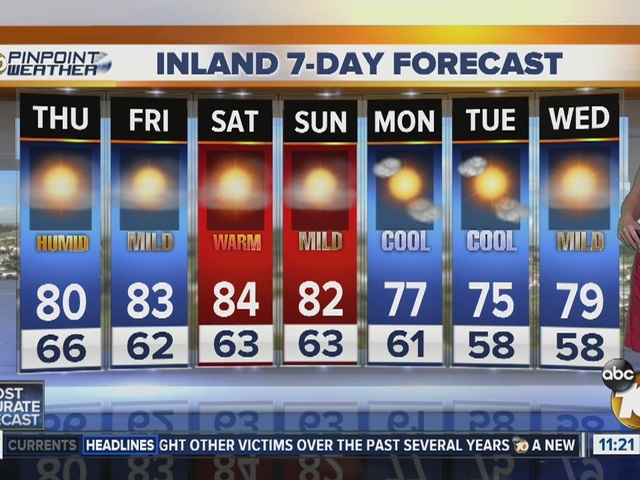
Perfect.

7. The blind guy came! Not the man with no sight, but the guy who measures our windows so we can get new blinds!! Yay! Mine are dingy and dirty. Some slats are bent, and one has a hole in it. Now that presents a puzzler: how did that hole arise??? I  have been at my site so long that I remember when the current blinds were installed (yes, I've been teaching since 1932)...I never saw a kid stab a hole, and I'm an attentive teacher. I will never know.

Hopefully installation will go smoothly
8. My printer got fixed!! Joy!

Image result for printer works meme
I hit print as soon as the repair lady left the room

9. One class only has 24 kids in it! It's my ideal number. The others are still sizable (34 in the other 4), but how fun to have one little one. And the books I recommended to them? They are all reading and enjoying them!! The Elephant Man, Bull Run, The Outsiders, To Kill a Mockingbird, Of Mice and Men... they are all hushed and focused during our advisory reading time. In fact, one girl tore out her John Green novel with a gleeful, "Yay! We get to read!" I'm in heaven.



Yummy
10. Now you KNOW I love my A/C, but it really is obnoxiously loud. When it's on, half the class can't hear the other half, and I can't hear them. The decibels are ridiculous. But the custodian called in a work order....it's going to be fixed!!!!

This school year is just off to a magical start.


Saturday, September 27, 2014

How to Teach the Middle Passage


Begin with the Triangle Trade, the text, and the smart board or overhead.  In their notebooks, have kids draw the east coast of North Am and South Am, and a rough blob for England and then a really rough outline of the west coast of Europe and Africa. Have them draw arrows indicating what items (or, sadly, people) are moving where.
money, money, money...

Then show them the famous cutaway schematics of slave ships. Have them really look at the pictures. Ask what's going on and WAIT...and then accept only full answers, not blurts like "Slave ship!" or "Cross section!" Dig until you get "It shows how to maximize how many slaves you could fit on a ship." Ask why maximizing would be important to the captain. Note the awful tinny sound the word "profit" makes in the presence of these pictures.
Oh my heart.

Ask kids to draw conclusions about conditions on board. Don't move on until darkness, stuffiness, heat, overwhelming smell, seasickness, easy spread of disease, and no dignity about bodily functions come up. Squelch the "Ewwws" by discussing shame, how they would feel about the lack of dignity afforded to them. Work until the students feel compassion, not grossed-outness.

Draw attention to the fact that the people captured on these ships were losing their direction--many never having been aboard a ship or seen the ocean. And then their language. Pick up Alex Haley's Roots and explain that he was blessed to have a thread of language clues passed down, that he had heard that his great-great etc granddad, Kunta Kinte, had gone to chop wood for a drum but never came back.
so good.

Tell how Haley tracked down his ancestor all the way to the west coast of Africa. How he listened to the griots, the genealogic story tellers that memorized ancestry their whole lives. How he listened to the translator say "Kunta Kinte went to chop wood for a drum, but was lost." About how he wept. About how the tribe wept with him and welcomed him home. Cry, because you just can't help getting teary eyed when you tell this.
"When a griot dies, it is as if a library has burned down." --Alex Haley
Explain that Haley wrote a book about his ancestors using what he found out. Tell them he spent the night on a ship to connect to Kunta's ordeal on the Middle Passage. Read excerpts from Roots about Kunta's first day aboard the slave ship.

Show a six minute clip of the film "Roots," the scenes where the men are being exercised on deck, of a dead man being unchained and unceremoniously flung over the ship's side. Listen for the student who mutters, "Horrible," or perhaps "That's so harsh." Congratulate him for his word choice. Share that this part of history is soooo much more than "sad." Suggest "tragic," "unthinkable," "shameful," and so on.

How did Haley know what to write about? Pass out four excerpts from The Interesting Narrative of the Life of Olaudah Equiano, a memoir about his capture as an eight year old boy and his ordeal on a slave ship. Have the kids read it, underlining parts they believe the other students should know about it since everyone is only reading one-fourth of the work. Field what they've read onto a class chart. Take questions. Later, contrast this reading with one John Barbot, a man who was a captain on a slave ship. Analyze the differences. Hey look, ma, I've been doing Common Core stuff since before you were born.
I only define some key words in brackets. It's highly readable.
When the bell rings, watch as they solemnly gather their belongings and file out with their brains (and hopefully hearts) full. Quickly rewind the old VHS video exactly 6:55, get the smart board back in order, and do it three more times.


Sunday, August 31, 2014

Don't get me wrong--

I get a little down in September and it's NOT because I don't love what I do.

It's because I love my summers. Long mornings, being fit once again, naps, BOOKS. I get down because all that disappears AND because I start all over again.

Come June, the kids and I have become a strange learning family. We have all kinds of shorthand and inside jokes. They know when I am joking around and when I am deadly serious. They can read my face and body language. They ask about my family and they bring me chocolate and cookies. And I can read them, as well.

Come September,  I am playing to a tough crowd. I crack all sorts of hiLARious jokes and they are scared to laugh--I'm serious--they will snigger into their hands because "what if this crazy teacher lady isn't trying to make us laugh and we get in trouble?" I forget how difficult it is to cleanly launch a class on a successful learning trajectory, how tough it is to teach them that we often enjoy our learning, but Fun is not the point--LEARNING is the point.

It's all good by October.  The cookies start coming, and they learn they can joke back and we laugh with abandon as long as we stay en pointe.

Here's to a new year with kids who catch on quickly!

Friday, March 7, 2014

Elie Weisel and the Little Rock Nine: Unbelievable but True

The first time I ever taught Night by Elie Wiesel, as I scrambled for resources to do this memoir justice, I stumbled upon wonderful materials that were written by one Dr Chris Frost. Mr. Google told me he was a professor at a nearby university. I sent him an email asking if he'd mind if some precocious 8th graders used his materials as we studied the book. He said we could--and offered to come lecture the students--for free.

I was floored by the generous gift of his time (and that he was unafraid of 8th graders, as many adults seem to be). As it turned out, he was one of just 18 students to sit under Wiesel at NYU the first time Weisel taught his own book. Can you even believe it???

His presentation gave our students rare insight into Night and afforded us an opportunity to ask loads of questions. At the end, we presented him with three carnations--a white one for Elie and those who endured the Holocaust, a red one for those who, like Dr. Frost, were teaching truth, and a pink one to represent the students and their promise--he was visibly moved. He said, "I'll have to tell Elie about this today." Can you even believe it???

When asked what courses he was teaching next, he said he was teaching a summer course comparing C. S. Lewis and Sigmund Freud....in Oxford, England. It so happened that I was going to Oxford to spend a week at the C. S. Lewis conference. "We'll have to meet up," he said. "I'd love to crash a class," I said. Can you even believe it???

It turned out the last full day the students and he would be in Oxford was my first day at the event so I couldn't sit in on his lecture. But then I got my agenda for the conference and that first evening Lamb's Players Theater was presenting "Freud's Last Session," a play about....ohmigosh, an imagined meeting of Freud and Lewis. He was able to get permission to see it with his students. Can you even believe it???

So this year is the first year I am teaching Warriors Don't Cry by Melba Patillo Beals, one of the Little Rock Nine who integrated Central High School in 1957. A parent of one of my kiddos forwarded a flyer informing us that Carlotta Walls LaNier, the youngest of the Nine, was to speak that very week at a local community college. And after a riveting evening of insights and stories and questions answered, I was in line to buy her book when one of my students came over to present me with a copy as a gift!! Can you even believe it???

Mrs. LaNier signed our books and agreed to a photo with us. I don't ordinarily rub shoulders with historical figures...and I want to have proof that it really happened. Because I can hardly believe it.

Here is a picture with two world changers--one of the Little Rock Nine who courageously stood up for justice and my student MRC., an incredible girl who is so gifted I can't believe I get to teach her and I can't wait to see how she impacts our future.

Saturday, December 21, 2013

That moment when the high school usurps your curriculum...AGAIN

Last post was about my thrilledness (Humpty Dumpty and Shakespeare give us all permission to invent words) over my highly gifted kids getting into Lord of the Flies. I was exuberant.

(I never blogged about why this unit was a big deal. See, I'd been teaching Animal Farm and To Kill a Mockingbird to my 8th graders for four years when the high school VP emailed my principal and told him those books were now (thanks, Common Core) going to be taught in 9th grade. It was more than lame--for one, I was getting ready to launch AF in a week or so, and two, TKAM is just my favorite. For three, teaching TKAM was so awesome after teaching Elie Wiesel's Night--to teach about a man of courage just brought me joy and was a wonderful counterpoint to Night's darkness. OK, I reconciled myself to writing units for two new texts this year. I asked the VP what the upper grades were teaching and only heard from one 9th grade teacher.

Fine. I spent days creating a unit for Lord of the Flies, and boy did I get excited. Talked to a teacher friend in Texas. Stole a few ideas from a teacher in Pennsylvania. Got some ideas straight from the Creator. Man, this was gonna be waaaay better than AF, waaaaay deeper. You can see read about my excitement here and here.)

Things just kept getting better, especially when I assigned chapter 8 for reading and the kids came in all shaking their heads about the answer to the question, "Who IS 'Lord of the Flies?'" Whoo!!!

After school that day I had a couple of formers come by to visit, sophomores in Honors English at the local high school. "Guess what we're reading, Miss M?" Oh dear Lord, please, no....

I dashed off an email to my principal and the high school VP, forwarding an old email where I'd asked for what the upper grades taught. I told them I'd heard no reply. I told them SOME of what my unit contained--Hobbes, Rousseau, leadership theory, Christ figure symbology, Freud--and got the response: "My best advice is to check with the department head before you select novels."

Are. You. Serious....

If my kids could do this in 8th grade, shouldn't the 10th grade teacher tackle something tougher? Give them Plato. Or just TELL ME WHAT THE UPPER GRADES ARE DOING, AS I'D ASKED. Or ask US what WE'VE done at the lower grades!

Anyway, my principal wrote a response supporting me: "Please understand that we need to keep Lord of the Flies here at DP." I haven't heard anything back from the high school or from him. I am hoping no new news is good news, but it's been a loonnnnng time since I have been that deflated. Gonna press on this year with my plans--comparing Peter Brueghel's paintings to the novels, finding music that goes with each character (compiling the definitive LOTF soundtrack with rationales), writing fine literary analysis papers, and celebrating all of it with a luau complete with PORK (bahaha) and the "islands" creating displays of the symbols and characters chosen from the text: fire, specs, the conch, the beast, pigs, Ralph, Simon, Jack, Piggy......and when they get to high school and the high school forces them to do the same things I had them do already, it will be upon THEM to write a new unit. These kids are ready for more.

And I think I am done giving up the books that work so well with my history course. 

Tuesday, December 3, 2013

That Moment When the Class Finally.....

I was beginning to think it would never happen, that inner click you feel as an educator when your class corporately buys into the book you are reading. But it happened today, and what a relief.

DAY ONE: Name choosing and nametag making was fine, fun, childish, unacademic, and silly--but good team-building. 

DAY TWO: It did NOT go well. We began with a Golding bio--fine as it went, and then started the book from the Pulitzer Prize winner. But the yards of description Golding pours into the island bogged us down (my exact 10th grade reaction: "Who CARES about all this stuff?? Tell the story, already!").  Boring. Yawn. I brought out the conch--mild interest--passed it around--mild interest. Sigh. I assigned the rest of chapter one for homework. I felt defeated.

DAY THREE: I passed out leadership style readings. This was a bit more interesting. In their islands they had to connect the styles to the boys and write down where in the text their support was. I asked, "Was this activity ok?" B., who LOVES to learn, said sincerely, "This was fun!" But MR. gave me that apologetic head tilted smile that said just as loudly, "Not really." I still felt better because the groups were talking. We launched the next chapter and made lists of the boys, their traits, the symbols, and our designations of meanings. The list-making was full-class but half-hearted. I trusted that list, though. I was thrilled when the kids posted Ralph as democratic and Jack as autocratic. Small victories when things aren't going your way can feel like huge ones.

DAY FOUR: I began chapter three with a handout about characteristics of Christ figures I teacher-stole from a wonderful teacher in Pennsylvania. More interest, especially when we looked at Obi-wan Kenobe, Gandalf, and Dumbledore in that light (they weren't familiar with Cool Hand Luke). "Is Simon going to die?" asked an astute person. "Perhaps, but necessarily--do you think Simon will be crucified or resurrected?" I returned. The normally jolly N. was uncharacteristically scornful: "Number 11 on this list is dumb! No one is a carpenter!" And so we began the chapter only to find the Simon is helping Ralph build a hut. "He IS a carpenter!" someone yelled triumphantly. Things were looking up. They finished chapter 3 over break. The Christ figure trope was a revelation for them, a novelty, cool and adult.

DAY FIVE: We pretty much straight read chapter 4 as a class, adding to our list about the boys. I talked about symbols, and the kids were a bit more into the drama. My VP walked into watch. Wish I had something better than reading aloud. Nope.

DAY SIX: But then today. Ah. Half the students read about Rousseau and the other half about Hobbes. Then we had a Chalk Talk--I had prepared the classroom with ten quotes, half from R, half from H, and the students responded to the quotes and to each others' responses using dry erase markers. It was like having ten silent conversations at once! I had warned them about writing stupid things like "I like turtles," but about three boys couldn't help themselves (Hobbes would say that--and I will use that tomorrow as an example in class). When we began to review chapter four, a shift happened. I don't know what, but the kids began to see the story as a story of human nature. I let them talk. "Would the kids treat Piggy differently if he looked different?" "I think Jack punching Piggy is a sign of civilization running down." (!!) "But what about the cover on this book? Why is that giant fly near Piggy? Is he Lord of the Flies?" And off the discussion ran: who WAS Lord of the Flies?

God bless this ambiguous cover
I finally shared what any bible-reading, church-going Protestant fifty years ago would know, that The Lord of the Flies is Beelzebub, Satan. (I did this by showing Wikipedia's entry and scrolling to the verses in the bible in Matthew 12.) The kids got excited about the reference to the house divided--"The island is dividing!" And then they wondered if the Beast, or maybe Jack, was the Lord of the Flies. Someone wondered if Piggy's name was connected to the pigs on the island. "The names are significant," is all I would say until a girl jokingly asked if Ralph was going to vomit since his name is slang for vomit. "His name means 'counselor,' I said. A thrill ran through the class, I felt it. I decided to share with them the secret of names that had captivated me decades earlier.  Above the lists of the boys, the students watched as the meanings of the names were written:
Ralph - counselor
Jack - supplanter, usurper
Simon - listener
Roger - spear
Piggy

"Piggy's name is significant because it means what it says." And the class blew up--"Piggy is going to die, not Simon!" "Simon is going to save Piggy because he is the Christ figure!" "Jack is evil and must be the Lord of the Flies!" They were all* so excited and absorbed, making connections and predictions--"Roger is Jack's tool to kill Piggy, just like Jack speared the real pig!" "Jack broke Piggy's glasses, does that mean the end of intelligence?" OK, cue the bell.

Tomorrow we will look for Hobbes and Rousseau in the text and have a quiz contest among the islands groups. But I believe that when I assign chapter five as homework the kids will enjoy it. FINALLY.

*"All" is a relative term. Do 36 students ALL do anything at the same time? In a class of 36, many of whom are introverts, it is sometimes difficult to be accurate about "all." I use it here in the teacher sense of "heavy majority with 36 sets of eyes looking alert."

Monday, November 18, 2013

Launching a Novel: A Team Approach

Today was Day One....but the books weren't here yet so I needed to stall.

I already had the kids in groups of four balanced for extrovert/introvertedness and work ethic (they are all bright, so I didn't have to worry about that). On the board were posted nine teams--or ISLANDS, as I am calling them:

Conch       Fire       Pigs      Spectacles     The Beast      Ralph      Piggy      Jack     Simon

First, we had a rock/paper/scissors war to see which team chose which name. And then, in reverse order, teams select from nine different colored team name tags. And then, teams had to choose an alliterative name and design the name tag. This took all period!

(I felt a little badly, because I know how some of the teams will bond with their character--Piggy's team will be upset, but will they be more upset than Jack's team? And Jack [his real name] is on Jack's team....but....)

....This was team bonding. They were exercising decision-making and tomorrow when we discuss leadership styles and launch the book, they will not only be analyzing the characters in the novel, but the characters on their "island."

So here they are:

Cool Conches
Fergalicious Fire
Petrifying Pigs
Sassy Squid Specs
Bewildering Beasts
Reck-it Ralph
Proper Piggys
Just Jack. (with the period)
Simon Says

These tags are on a board, and there will be a place for the best team for that assignment to move to called "Who's Got the Conch?" Plus, when I was in Puerto Rico I bought a gigantical conch and it will be magical when they see it after Ralph in the book finds it. And they will enjoy David Gunnar blasting it (especially since one Sassy Squid Spec is named Gunnar) :


Don't be fooled by this dorky intro; we will be reading Thomas Hobbes, Jean-Jacques Rousseau, Sigmund Freud, leadership theory, and more before we end, and we will each write a serious piece of literary analysis. The culminating salon will be a luau with ROAST PORK, of course, and each Island will decorate their table appropriate to their symbol/character, and will present at the luau how their character or item highlights Golding's theme, adds to the plot, and something else I haven't yet decided.

Having the students on Islands means they have built-in discussion partners, built-in, long-haul team work, and that some days I'll only have to collect nine assignments instead of 36. I am also pitting them against each other (overtures of Jack versus Ralph, right?) for each response and that should up the quality for this highly competitive group.  My dream class would be where we could decorate the room like the island in the book as we learned details about it...

Sunday, October 13, 2013

Feeding Your Teacher-Soul

Let me lay down some truth:

1) No one understands this job who hasn't done it, but they all think they understand. People will always say stupid things like, "If you complain about grading it, why did you assign it?" They will say stupid things like, "You get out at 2:30 and get all those holidays off." It helps me to remember that if Jesus forgave people for crucifying Him, I should forgive such radical, deep-seated, COLOSSAL IGNORANCE of what it takes to do this job well. Keeps the old blood pressure low.

2) If you care about your job at all, Teacher Brain happens. This is a condition that is marked by the inability to think or talk much about anything else except what happened in the classroom and what you need to get done for school. Where ever you go, you are thinking about lesson plans or challenging students. It can make you verrrrry boring because all of your sentences begin something like, "Last Thursday in period 4...." In extreme cases of Teacher Brain, you dream about school all the time.

Now teaching is the most important job besides parenting. And I love it. But the Two Truths have made me doubt what I do at times.  Look, forever being misunderstood and isolated by my career's idiosyncrasies is no way to live my one precious life.

So here are some ways I've found to feed my Teacher-Soul.

a) Unplug. Choose one night a week to go screenless. No grading allowed. No planning. If at all possible, no talking. Find the quiet. Ahhh.

b) Read a book that is NOT a professional development book. (This is my favorite!)

c) Read Angela Watson's Awakened, a book specifically written to help us teachers deal with Teacher Brain and teacher burn out. It's reallllllly sensible, and since Watson was a teacher, she KNOWS.

d) Watch teacher movies that inspire you, not demean you. Say "yes" to "The Ron Clark Story," "Stand and Deliver," "Dangerous Minds," "To Sir with Love" and the like. Buy them. Watch them when you are down. Avoid movies that trivialize the true work of educators.

e) Schedule fun. If you don't, those @#$% essays will consume you and embitter you. (Not a pretty combo.)

f) Join social media that is deliberately teacher-uplifting. I am loving Angela Watson's "Encouraging Teachers" on MugBook. Talking to other people who really DO understand what you do is a safe place to vent without boring anyone, and no one will say profoundly STUPID things.

e) If you can swing it financially, keep your precious summers free of summer school. It'll take a little while for Teacher Brain to subside, but that time will rejuvenate you and ensure that you love your job even two decades after you started. Well, that's a personal testimony. But we simply MUST step away from the classroom for our own mental well-being.

f) Exercise! But you already knew that one, right?


Thursday, August 22, 2013

Teach me HOW to, Dougie....and I'm just wild about Harry

THE FIRST DAYS OF SCHOOL: For many years I have believed Harry Wong was the only one who really knew how to write so that teachers would become better at what they do. He knew without good management skills, good teaching was near impossible. When he said to NOT do a fun activity to lead the year, it was water in my face--a shock. Really? Wouldn't that make kids excited about school? But he explains himself and he is right. I have read this book sixteen (16) (XVI) times and it's probably time for me to do so again. Wong always reminds the reader of how respectable our profession is, how indispensable, how wonderful. He makes me proud of what I have chosen to do, and he helps me do it better.

At first I thought that was it. This was the one really great useful book for teachers. Oh sure, there were lots of little inspirational ones, or little helpy ones that usually didn't apply to my content or whatever. But then our site decided to delve school-wide into:

TEACH LIKE A CHAMPION: Doug Lemov succinctly explains the best techniques that the best teachers use, and he shares how to implement them.  He cares about EVIDENCE, not trends, upon PROOF, not intuition. I kind of laugh when I hear some of our staff members say, "This is all stuff I do already," because, tee hee, "No it isn't. You do SOME of the stuff, and some of the stuff you do, you do in the way that he says not to do." Not gonna lie--I thought I was a pretty good teacher until I read this book. I have a long way to go and lots of room to improve, and Lemov's eminently useful book is going to get me farther in my journey to be an awesome teacher than I could have dreamed. I also bought the field guide to accompany the book but can't speak to that since I haven't cracked it open yet. Lemov makes me eager to see how much I can grow.


Friday, July 12, 2013

Homework done!

I've rediscovered
the joy of days I choose to fill
(NOT paperwork--NO!)
Chick Fil A gave free
breakfast to us, dressed as cows,
my awesome cousins

And then alfresco
lunch at the winery with
mom and dear friend

Theater tonight!
Playing on my retirement
island. (C'mon, Lotto!)

And I just finished
one of the best books I've read
in years of Sundays

Tuesday, June 25, 2013

Summer School Homework

I've written elsewhere about the delicious, holy moment that comes with turning in the classroom key.

But I haven't really told you how hard it is to slow down.

When the Blessed Day comes, I find I am running still, and it takes about two weeks to truly enter into the joy of rest.

On the first day off, I become aware that my breathing is shallow. I do some post-guest laundry and put-aways. I play Words with Friends. I finish two books (one I started last month and the other, a year and a half ago). I take a nap. I put on walking shoes and hit the bay. I go to the grocery store.

Except the nap, everything I did was a Have To. Those are ordinary Sunday afternoon activities. (I wouldn't ordinarily put reading on a Have To list, but that nine billion page memoir by Condoleeza was a present from my mom and there were twenty pages left, and the other was a meh Hemingway novel.)

The problem is that all year long there is a steady stream of "If I only had some time" thoughts and a steady stream of invitations and fun things I turn down because of grading and planning. When the days of freedom arrive, I feel that I need to rush to get all the summer projects done at once before Summer runs out, that I need to get out there and have some Fun, quickly, before I put my brain to the plow again. But when Fun is something you HAVE to do, it smells a little like Work.
This fellow's Fun looks like Work to me--and that's how my first two weeks of vacation feel.

That's why the binders I HAVE to organize are in the closet--they will keep until I re-learn how to live like a normal person.  Here's my new Have To list: I need to re-adjust my internal clock to my usual past midnight bedtime and 8 am up-time. I need to say yes to friends' invites, unless I don't want to go, in which case I need to say no.  I need to waste some time, to feel hours grow slower. I need to lay by the pool or the beach with a really good story (not some political recap), and Malcolm Guite's poetry, taking snoozes if I want to. I need to watch some movies I've missed and watch some oldies I've seen before that feed my soul. I need to resume what I like to call my morning "runs." I need to sit in coffee shops, post-"runs," drinking noncoffee beverages with books, books, books. And maybe a friend. Yes. I need to waste more time. I need to learn how to vacation breathe.


Friday, May 24, 2013

Teaching My Favorite

Loving a book is one thing; teaching it to a class--in late May-- is another. My man Abe Lincoln said you can't please all of the people all of the time, but something in me needs everyone to like, nay, love this book. I first taught To Kill a Mockingbird to the first 9th grade English class I ever had, exactly three days after I'd read it for the first time--I loved it so much I HAD to share it with kids, right away. Trouble is, if a kid doesn't like this book, I am mortally wounded and darkly conclude the child has no soul. Fast forward a billion years and I love the book even more, so am even more crushed and devastated if anyone rejects my favorite.

Mr. B., the math teacher, told me the kids were buzzing about the book, really enjoying it, pursuing conversations about it outside my classroom. YESSSSS! Perhaps it is inevitable--one of my kiddos' middle name is (really and truly) "Atticus."

And imagine my elation when JB., upon entering my bungalow this morning and seeing the weekend's homework was to read three chapters, voiced, "YESSSSS!" with a huge smile on his face.

"JB., you're not mad you have some homework over the weekend?"

"No, Miss M--I LOVE THIS BOOK!"

And yes, he said it in all capital letters; my heart heard his correctly.


Wednesday, June 27, 2012

Graphology, Television, Plato, and Paul

When I was in third grade, we had a guest speaker who was a graphologist. I was FASCINATED by the idea that you could discern someone's personality traits from their handwriting.


The guest said since we were just learning cursive, it was too soon to really analyze our own writing. But I do remember a classmate asking that since our writing showed our personalities, could CHANGING our handwriting shift our personalities--because the guest said YES. I tripped out.  (Hold that thought.)


Now I have never researched graphology (although I admit to analyzing people's handwriting all the time based on what I learned that day--high cross on your t's mean you think highly of yourself. Open loops above your a's and o's? You can't keep a secret), but this morning I wondered if there was a similar link between SES and TV viewing. 


I found a study from 2001 which analyzed viewing habits of 26,420 people in five Latin American countries, and sure enough, what they watched was influenced by their wealth and education.


Here is what the researchers found:


" Insofar as their television viewing are concerned, we observed these preferences:
  • SES Level A: travel, business & finance, economy, recent Hollywood movies (on premium cable channels or pay-per-view), internationally produced drama series, politics  [TOP 10% of SES]
  • SES Level B: biographies, documentaries, general interest & education, local news, sports [NEXT 20%]
  • SES Level C: sports commentary, live music concerts, music videos, cooking, home decoration, entertainment, home shopping, internationally produced telenovelas [NEXT 30%]
  • SES Level D: domestically produced novelas, game shows/contests, comedies, horror, cartoons. [NEXT 40%; see chart below; all brackets Haiku Education's]"
Back to the held thought: can changing one's viewing habits influence one's SES? Hmmm.

Here is the education connection. Aristotle believed that the purpose of education is "to make the pupil like and dislike what he ought." Everything Else Thrown In puts it this way:  "Plato, the teacher of Aristotle, said that a properly trained youth was one “who would see most clearly whatever was amiss in ill-made works of men or ill-grown works of nature, and with a just distaste would blame and hate the ugly even from his earliest years and would give delighted praise to beauty, receiving it into his soul and being nourished by it, so that he becomes a man gentle of heart.”    As scary and Big Brother-y as this can sound, it's true that children tend to develop tastes heavily influenced by those around them and their culture, INCLUDING their teachers. 

AND SO... I want to expose my charges to the beautiful and the true. I want them to feed on integrity and good character. I want them to ask "why?" I want the novels in my class library to help them become noble and jolly. This TV study supports my notion that mainstream TV is an enemy of their financial future; perhaps so are certain types of books. This is not a censorship argument--if a kid is into bodice-rippers, that's her business--but I want to have a shot at helping to WIDEN and perhaps shift that taste to include, perhaps, some Charlotte Bronte or Jane Austen, or Ray Bradbury for that matter. 

I guess I am just echoing what Paul wrote in  Philippians 4:8:

"Finally, brethren, whatsoever things are true, whatsoever things are honest, whatsoever things are just, whatsoever things are pure, whatsoever things are lovely, whatsoever things are of good report; if there be any virtue, and if there be any praise, think on these things."


Monday, March 5, 2012

The Sanitation Crew, Harper Lee, and My Daddy

My dad is nicer than your dad. For instance, every week on trash pick up day, my dad leaves bottled water atop the bins so the sanitation crew can have some refreshment. (He's also a ten gallon blood donor and buys Girl Scout cookies from whomever comes to the door, plus dogs and babies love him. There's more, but you get the idea.)

He also brings home used copies of To Kill a Mockingbird, my favorite book, so I can give them to special students just because.

Tonight I found a new copy of The Moon Is Down at a used bookstore, and I am gonna have a drawing for it, inspired by my daddy.

His kindness is a constant education for me; I hope to pass on his lessons and legacy.


Wednesday, February 29, 2012

Steinbeck > almost everything in English so far this year


Today we finished Steinbeck's The Moon Is Down. They were quiet--N. had tears in her eyes, three kids sighed, and J. said, "We should clap." But no one did, because we were drinking it in.

One student made a point to tell me in the afternoon that he "really, really, really, really liked that book," and his eyes were shining.

We didn't do one bit of writing about it. All we did was enjoy it and, since we are studying persuasive writing, see if the novella was just propaganda, what Steinbeck's message was then, and if his ideas are still relevant. Good conversations and shining eyes.

Saturday, January 15, 2011

Unhappy People Watch TV, Happy People Read/Socialize

This article I copied from HybridMom.com is PACKED with implications, conclusions, conversations waiting to happen--you may just want to read it during your favorite show's commercials:

http://www.hybridmom.com/articles/live/parenting/unhappy-people-watch-tv-happy-people-readsocialize

Newswise — A new study by sociologists at the University of Maryland concludes that unhappy people watch more TV, while people who describe themselves as very happy spend more time reading and socializing. The study appears in the December issue of the journal “Social Indicators Research.”

Analyzing 30-years worth of national data from time-use studies and a continuing series of social attitude surveys, the Maryland researchers report that spending time watching television may contribute to viewers’ happiness in the moment, with less positive effects in the long run.

“TV doesn’t really seem to satisfy people over the long haul the way that social involvement or reading a newspaper does,” says University of Maryland sociologist John P. Robinson, the study co-author and a pioneer in time-use studies. “It’s more passive and may provide escape - especially when the news is as depressing as the economy itself. The data suggest to us that the TV habit may offer short-run pleasure at the expense of long-term malaise.”

TV VIEWING DURING A FINANCIAL CRISIS

Based on data from time use surveys, Robinson projects that TV viewing might increase significantly as the economy worsens in the next few months and years.

“Through good and bad economic times, our diary studies, have consistently found that work is the major activity correlate of higher TV viewing hours,” Robinson says. “As people have progressively more time on their hands, viewing hours increase.”

But Robinson cautions that some of that extra time also might be spent sleeping. “As working and viewing hours increase, so do sleep hours,” he says. “Sleep could be the second major beneficiary of job loss or reduced working hours.”

STUDY FINDINGS AND DATA

In their new study, Robinson and his co-author, University of Maryland sociologist Steven Martin, set out to learn more about the activities that contributed to happiness in people’s lives. They analyzed two sets of data spanning nearly 30 years (1975-2006) gathered from nearly 30,000 adults:

  • A series of time-use studies that asked people to fill out diaries for a 24-hour period and to indicate how pleasurable they found each activity;
  • General Social Survey attitude studies, which Robinson calls the national premier source for monitoring changes in public attitudes – in-depth surveys that over the years consistently asked subjects how happy they feel, how they spend their time among a number of other questions.

UNHAPPY PEOPLE VIEW SIGNIFICANTLY MORE

Robinson and Martin found that the two sets of data largely coincided for most activities – with the exception of television.

From the General Social Survey, the researchers found that self-described happy people were more socially active, attended more religious services, voted more and read more newspapers. By contrast, unhappy people watched significantly more television in their spare time.

According to the study’s findings, unhappy people watch an estimated 20 percent more television than very happy people, after taking into account their education, income, age and marital status – as well as other demographic predictors of both viewing and happiness.

UNHAPPY PEOPLE ARE HAPPY WITH TV

Data from time-diaries told a somewhat different story. Responding in “real time,” much closer to daily events, survey respondents tended to rate television viewing more highly as a daily activity.

“What viewers seem to be saying is that ‘While TV in general is a waste of time and not particularly enjoyable, the shows I saw tonight were pretty good,’ ” Robinson says.

The data also suggested to Robinson and Martin that TV viewing was “easy.” Viewers don’t have to go anywhere, dress up, find company, plan ahead, expend energy, do any work or spend money in order to view. Combine these advantages with the immediate gratification offered by television, and you can understand why Americans spend more than half their free time as TV viewers, the researchers say.

Unhappy people were also more likely to feel they have unwanted extra time on their hands (51 percent) compared to very happy people (19 percent) and to feel rushed for time (35 percent vs. 23 percent). Having too much time and no clear way to fill it was the bigger burden of the two.

AN ADDICT’S FIX

Martin likens the short, temporary pleasure of television to addiction: “Addictive activities produce momentary pleasure but long-term misery and regret,” he says. “People most vulnerable to addiction tend to be socially or personally disadvantaged. For this kind of person, TV can become a kind of opiate in a way. It’s habitual, and tuning in can be an easy way of tuning out.”

The point of this post is not to slam TV or movies, but to offer A BETTER WAY. That's what education is supposed to do. All legal work has dignity, but education offers choices. I ache when I think of all the wonderful hours my students miss if they haven't yet discovered the magic of reading.